


 By
By In today’s competitive world, companies are now realising that people are their valuable assets. And managing them requires more than just basic knowledge.
That is where Talent Management comes in. Think of it as a way for HR to find the reliable employees and retain those who can help contribute to the company’s success.
For those who want to know more about this, you should read this blog. Here we will walk you through what talent management is, HR strategies, and models.
What is Talent Management?
Let’s start with a definition!
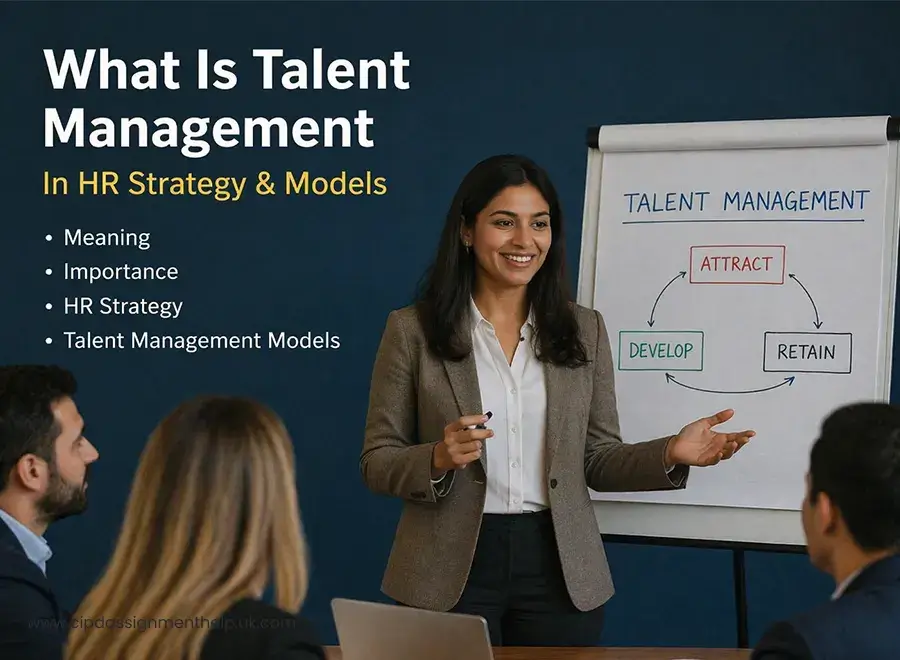
In short, talent management is about hiring the right people who can boost the company’s revenue. Furthermore, through this process, the companies can hire, retain, manage, and train employeeswhile aligning these efforts with workforce planning to meet future organisational needs.
If we talk about the book definition, then it is about building a workplace where people don’t feel they are stuck. Instead, it helps HR boost employee morale
Is it important to run an organisation? Read on to find out!
The Importance of Talent Management
Have you ever worked somewhere where it was a ticking bomb? If not, lucky you!
But suppose there is no growth and no recognition. You are becoming machines that do the same. You wear out over time, and your work suffers.
Then you decide to go one day.
Now suppose the opposite. You have joined an environment where you are appreciated and your talents perfected.
This is what talent management does!
What Is the Reason Why Organisations Require Talent Management?
You learned about the significance of Talent strategy through imagination and stats. But what is its benefit to organisations? Some of the most important ways are:
- Those who have a vision and a future of growth in the workplace remain longer.
- When expectations are clear, employees’ work gets better.
- When people are supported, they cope with the changes.
Organisations, therefore, take note! Without investing in your people, your competitors will capture your best talent. This is why you should have talent management strategies! But what are they?
We shall hear about them in the following passages!
4 Effective Talent Management Strategies
This part of the blog is for HR teams!
Remember that a good Talent strategy system doesn’t just exist on paper. Instead, it helps reduce the gap between what people actually love and the direction of the businesses.
Your employees are not just your workers; they are your assets. When you treat them nicely, things become different. It provides a place for people who can develop and desire to remain.
That is, good strategies are not complex. All you should do is just remain consistent with the following Workforce management strategies:
1. Hire with purpose
It is not just about filling a position in recruitment. It means enquiring, and thinking will this one grow here?
Yes, skills matter! But that is not all. You require mindset, attitude, and cultural fit.
2. Continuous talent development
What can go wrong at the workplace? It is fixed in a position!
That is to say, employees expect:
- Growth
- Training
- Mentoring
- Learning
So, the key Workforce management strategy is to make development feel real. It should not just be a checkbox.
3. Ensure their performance makes sense
Imagine, as an employee, you are staring at a form filled with boxes and ratings. It is your once-a-year review. You took a deep sigh as you tried to remember what you did eight months ago.
It felt more stressful than helpful.
Therefore, modern workplaces are moving away from that. Instead, they focus on regular feedback, honest conversations, and achievable goals.
4. Keep employees engaged
Engagement is not about giving free snacks or occasional rewards. It is about making employees feel seen. When people feel recognised and supported, they perform better. So, they stick around.
But to put these People management strategies into practice requires a process. So, to understand it, let’s break it down in the following section!
What Is the Talent Management Process?
HR professional! Think of talent management as a cycle. It doesn’t stop at hiring. But it keeps going, including the following key components.
Talent Acquisition
This is about hiring people who won’t just fit today. But it can grow tomorrow. Hence, this process involves:
- Employer branding
- Recruitment marketing
- Candidate screening
- Selection techniques
By this, organisations can pick the best fit for their business goals.
Learning and Development
This is where employees build skills, gain confidence, and prepare for bigger roles. This involves providing employees with:
- Training
- Workshops
- Seminars
- Learning programs
Performance Management
Regular feedback keeps everyone aligned. So, there are no surprises. This also helps in:
- Employee engagement
- Strengthening communication
- Recognition
- Improvement
Hence, it helps employees feel motivated and committed to the organisation’s mission.
Succession Planning
Smart organisations don’t wait for leaders to leave. This means identifying and developing internal talent. As a result, capable people are ready to step into leadership roles when needed.
Talent Management Models
Not all organisations do things the same way. So, here are different talent management models:
Integrated talent management model
In this model, hiring, development, and retention are all together. Everything works together. So, there are no silos.
9-Box Model
This is a simple model where HR teams assess performance against potential. In other words, in this, they identify who is ready to grow.
The competency-based model
This model focuses on helping employees build the exact skills needed for the role.
Trends changing talent management
The pace of change is relentless! Employee development strategy is evolving fast. Here are new trends that are transforming how organisations find and hold people:
- Making decisions with data: HR is not flying blind. People analytics now give leaders clear insights. So they can hire better and hold onto great people with far more confidence.
- Agile Talent Management: Organisations need to adapt fast. Rigid systems don’t work anymore.
- Personalised employee experience: Organisations now can’t use a single talent management plan. People want learning and growth that fits them.
- Remote Work Management: Managing remote teams is now a new reality of today’s HR.
How to Improve Talent Management?
HR teams!
“Small shifts create the biggest difference!”
That is to say, here are some minor tips to improve talent management:
- Make sure everyone knows what the organisation expects from them,
- Provide consistent feedback.
- Support continuous learning
- Use technology to simplify and speed up your processes.
With these minor changes, organisations will start to notice better performance, higher retention, and no conflicts.
Conclusion
Talent management is not a mere HR practice. Now, it is a necessity for every organisation. That is to say, when organisations invest in people, everything improves. Work gets better. People stay longer. Growth becomes sustainable.
But what is the biggest shift that talent management brings? helps employees stop feeling like they are just “working.” So they start feeling like they belong to the organisation’s success!
Frequently Asked Questions
1. What is talent management?
It is a process through which organisations hire, develop, and retain employees. So they can meet their goals.
2. Why does talent management matter?
It is important because it keeps employees performing better and staying longer.
3. How does talent management work?
It works through hiring, development, performance tracking, and planning for succession.
4. What are talent management strategies?
They are practical methods used to grow and manage employee skills.
5. What is the process of talent management?
The process of talent management includes:
- Planning
- Hiring
- Training
- Performance management
- Retention
6. What are talent management examples?
- Leadership programs
- Training
- Mentoring
- Planning for succession
7. What is a model of talent management?
It is a framework used to guide employee growth and performance.
8. How can organisations improve talent management?
They can improve talent management by focusing on development and feedback.
9. What are the benefits of talent management?
Better productivity, stronger retention, and future leaders ready to take critical roles.
10. What is talent management in HRM?
It is how HR practices come together to manage and grow employees.



